Seaweed – an ingredient with great potential
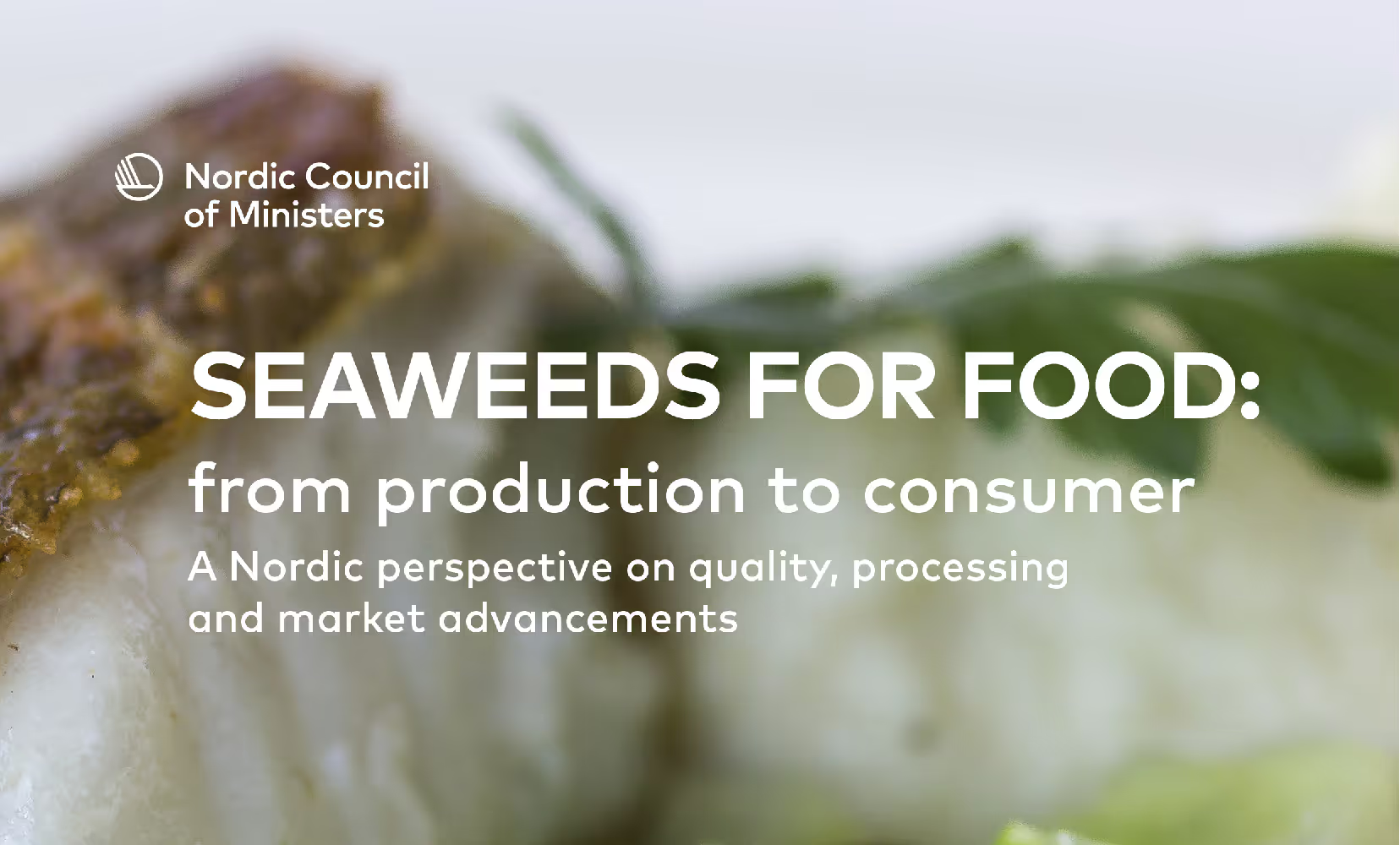
The report highlights that seaweeds are low-calorie ingredients rich in micronutrients, vitamins, minerals, dietary fiber, and bioactive compounds. When used in small and realistic quantities, macroalgae can help improve the nutritional profile, reduce salt content, and add natural flavor and texture to a variety of food products. This makes them attractive for developing more sustainable and “clean-label” products.
Critical processes for quality and safety
Because fresh macroalgae degrade quickly, proper post-harvest treatment is crucial. The report shows that gentle methods like seawater blanching can preserve both flavor and nutritional content, while more advanced technologies such as pulsed electric field (PEF), high-temperature treatment, and fermentation make it possible to adapt the raw material for specific food applications. Such processing provides better control over microbiological safety and iodine levels.
Iodine – a key resource requiring control
Seaweeds are one of the few plant-based sources of iodine, a nutrient that many Europeans do not get enough of. At the same time, iodine content varies significantly between species and processing methods. The report shows that the combination of species, processing, and dosage makes it possible to ensure stable and safe iodine levels in food products based on seaweed.
Strong Nordic collaboration – Led by Møreforsking
The report is the result of efforts from a number of research and industry partners in the Nordic region. The work was carried out within the NordKelp project, funded by the Nordic Council of Ministers, with contributions from research and industry partners in Norway, Denmark, Iceland, and the Faroe Islands. Møreforsking had overall responsibility for the report and led the work of collecting, quality-assuring, and disseminating the latest knowledge in the field.
More about this project
The NordKelp project addresses innovation in the food industry and the emerging marine bioeconomy based on cultivated macroalgae. The project focuses on cultivated kelps (large brown macroalgae) as renewable and non-traditional food crops for the provision of safe, nutritious and flavourful ingredients to the food industry. The project will summarize and disseminate the state-of-the-art knowledge from recent and ongoing R&D activities related to the processing and quality of kelp biomass to food applications.