KrabbeFrakt: Logistics solutions for shipping live snow crab
The project aims to develop gentle and sustainable solutions for storing, packing, and transporting live snow crab — enabling a high‑value export chain with significant market potential.
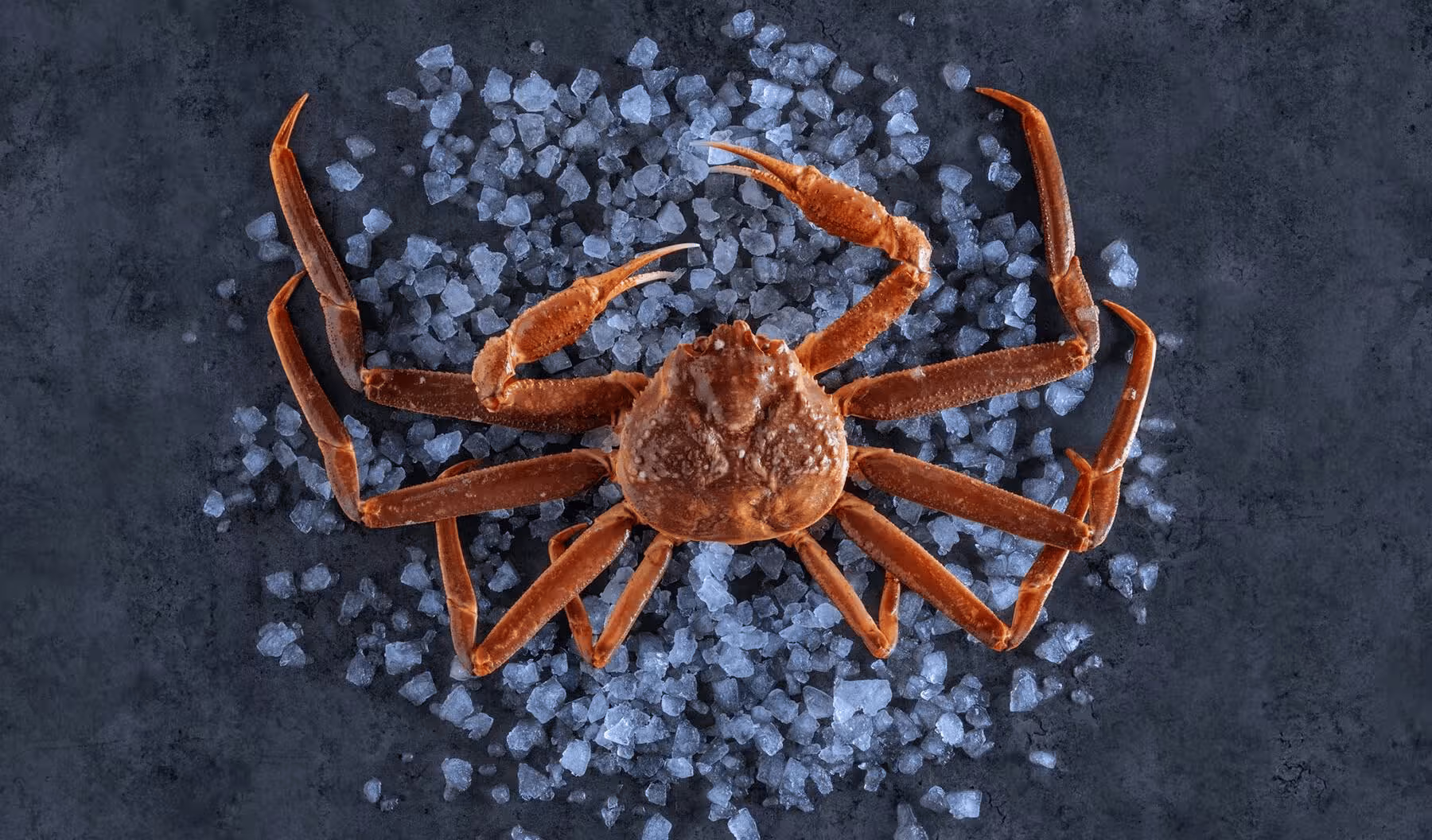
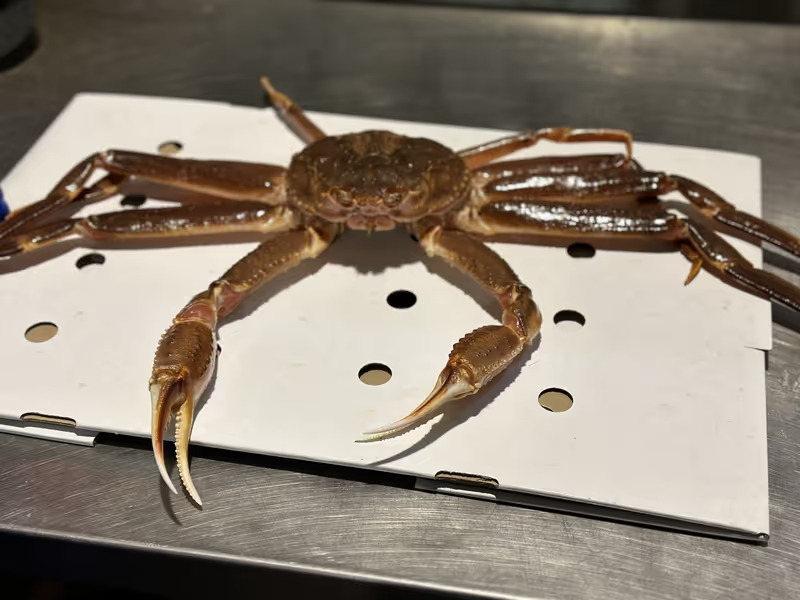
Snow crab (Chionoecetes opilio) has become an important fishery in the Barents Sea, with a quota nearing 10,000 tonnes in 2024. While most of the catch is currently exported as boiled and frozen products, the market for live snow crab is expanding rapidly and offers considerably higher prices. To capitalize on this opportunity, the value chain must be adapted to the species’ physiological needs and ensure high standards of animal welfare.
The project brings together exporters, industry partners, fishers, and research institutions to develop solutions that make reliable transport and storage of live snow crab possible. The challenges are substantial: snow crab is more sensitive than king crab, reacts poorly to rough handling, and has a very narrow temperature tolerance (1–2 °C). This necessitates carefully designed technology, handling procedures, and transport protocols to reduce injury and mortality.
Researchers will test different transport methods — from dry transport to water‑based systems — and examine how pre‑treatments such as cooling can extend survival time and widen the transport window. The goal is to establish best practices for live snow crab handling, from capture to market, and to lay the foundation for a profitable, sustainable, and animal‑welfare‑oriented value chain.
Contact person

Do you want to collaborate with Møreforsking, or do you have questions about our publications or projects? Feel free to contact us, we are happy to help you find the solution that best meets your needs. Our researchers offer broad expertise and extensive experience across a wide range of marine disciplines.