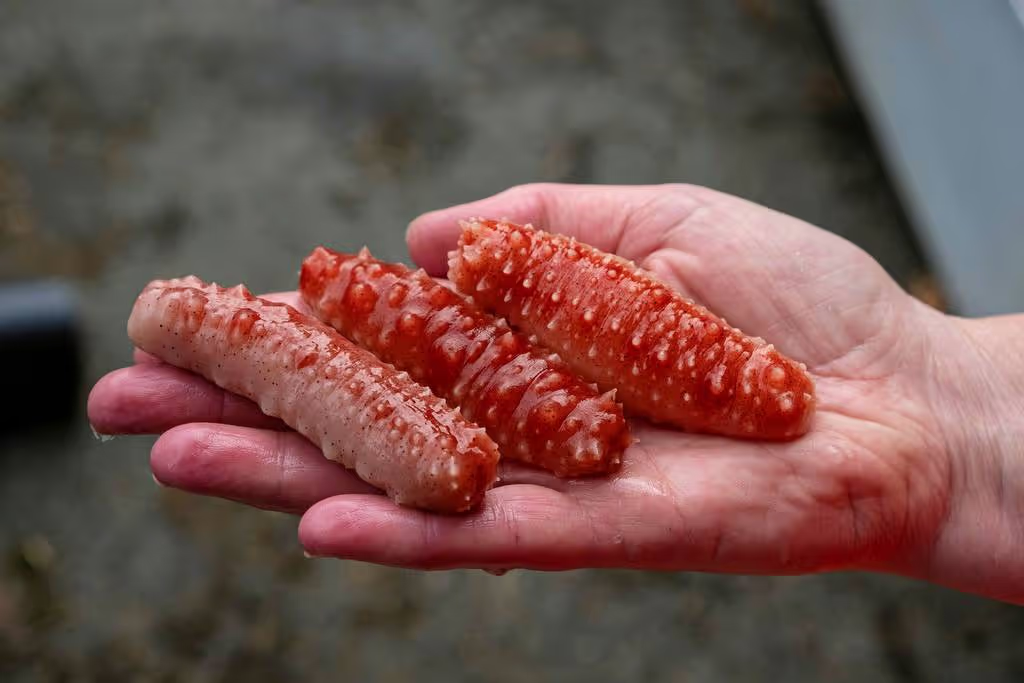
Sea cucumbers are a sought-after delicacy in many parts of Asia and have been used for centuries in traditional health foods. Their nutrient-rich composition—including proteins, essential amino acids, vitamins, minerals, and marine oils—also makes them attractive for emerging seafood markets.
The red sea cucumber (Parastichopus tremulus) is of particular interest for Norwegian seafood research and nutrition. The species occurs along the entire Norwegian coastline and is frequently taken as bycatch in commercial fisheries. This availability makes it a potential candidate for a targeted fishery, but until recently, knowledge of its biology, ecology, and population structure has been limited.
Sea cucumbers also show great considerable promise in aquaculture. They can be co-cultured with fish, shellfish, and macroalgae as part of integrated multi-trophic aquaculture systems. However, sustainable development of such systems requires solid biological and genetic knowledge.
To support this, Møreforsking has recently sequenced the complete genome of the red sea cucumber, with results published in the journal Genome.
Access to genome data provides researchers with entirely new insights into the species' genetic characteristics. This knowledge is crucial for:
- understanding how the species can be cultivated in captivity
- developing tools to study population structure along the coast
- enabling responsible, long-term resource management
- exploring opportunities in bioprospecting, where genetic resources may form the basis for new products in seafood, medicine, and health foods
Mapping the genome is an important milestone for marine research—and only the beginning. The study was carried out by Roger Meisal and Gyda Christophersen.
More about this project
The Sjøpølse-Popgen project aims to fill critical knowledge gaps related to the population structure and life history of the red sea cucumber by using genetic methods.