Sjøpølse-Popgen
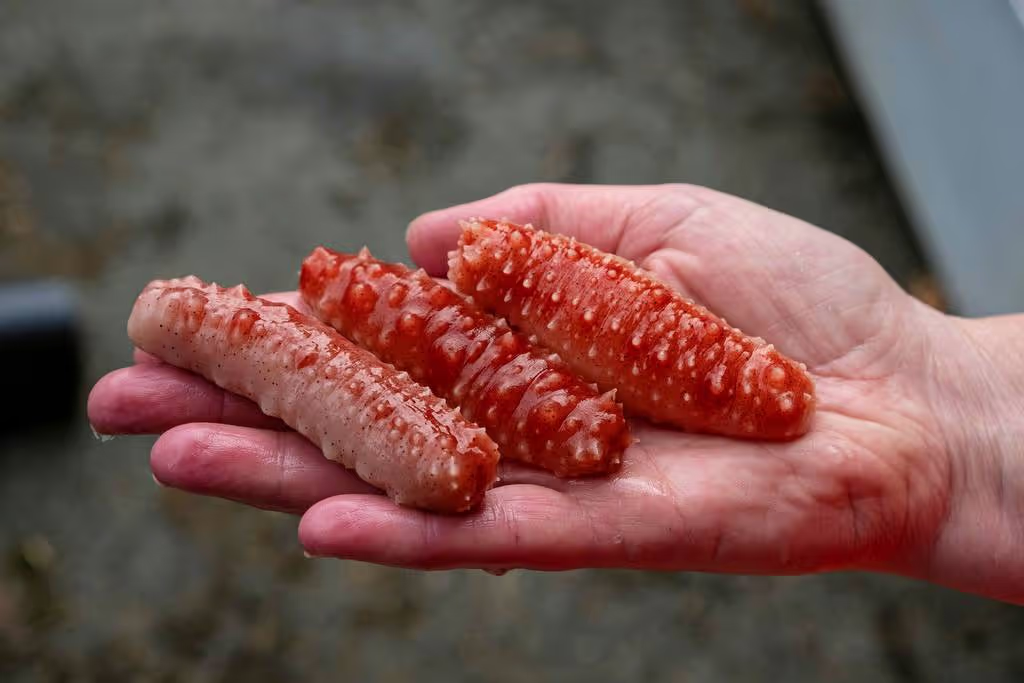
The Sjøpølse-Popgen project aims to fill critical knowledge gaps related to the population structure and life history of the red sea cucumber by using genetic methods.
The red sea cucumber (Parastichopus tremulus) is an echinoderm found along the entire Norwegian coast, but its biology, life history, and population dynamics remain poorly understood. To address this, biological material has been collected from several geographic areas in Vestland, Møre og Romsdal and Trøndelag. In addition to gathering morphological data, tissue samples, and assessing maturation stages, the project has developed a sampling method that enables the extraction of high‑quality DNA from the species.
Genetic tools are valuable for studying demographic relationships and population structure. Development of microsatellite markers is currently underway, using markers derived from the species’ genome — sequenced at Møreforsking. These markers will support analyses of genetic diversity, connectivity, and population subdivision, forming a foundation for future management and potential utilisation of the red sea cucumber as a marine resource.
Related publications
Contact person

Do you want to collaborate with Møreforsking, or do you have questions about our publications or projects? Feel free to contact us, we are happy to help you find the solution that best meets your needs. Our researchers offer broad expertise and extensive experience across a wide range of marine disciplines.