UtiHavet - Development of pot for competitive and environmentally friendly catching of shrimp
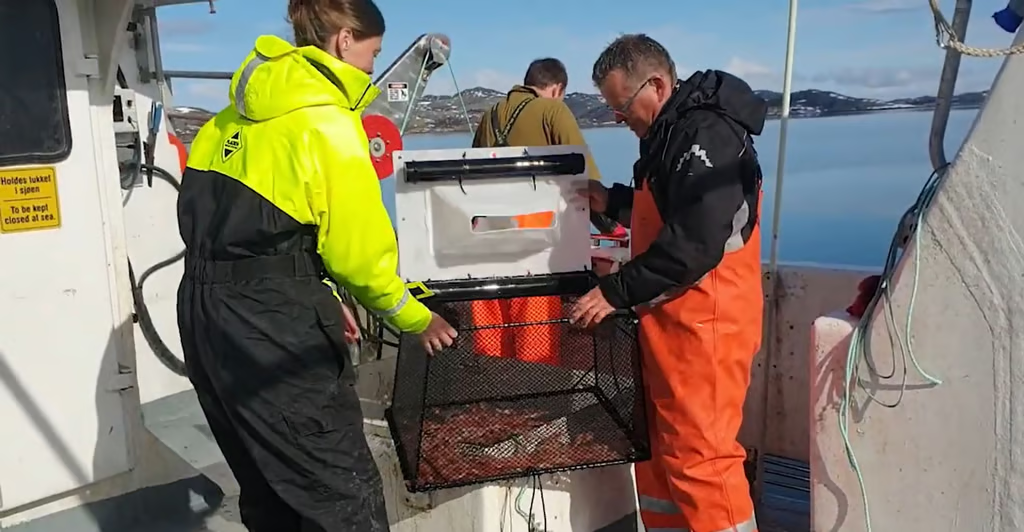
The project is developing a new pot for sustainable deep‑sea shrimp fishing — an environmentally friendly alternative to trawling, with a lower climate footprint and improved raw material quality.
Deep‑sea shrimp (Pandalus borealis) is the most important shellfish resource in the North Atlantic and one of Norway’s most valuable crustacean species. Today, shrimp are primarily harvested using bottom trawls, a method associated with high CO₂ emissions and considerable seabed impact. Pot fishing is gentler, allows for better size selection, and can yield higher prices for premium-quality shrimp — yet it is currently little used in offshore areas.
Building on experience with fjord pots, the project will develop a robust pot specifically adapted to deep‑sea conditions. The gear must withstand strong currents and variable bottom topography while ensuring high catch efficiency and excellent raw material quality. Development efforts will focus on optimal material choices, stability, and pot design to minimise environmental impact and improve profitability.
The overarching aim is to establish a sustainable and environmentally efficient fishing method that offers the ocean-going fleet a new product with a lower climate footprint and high value creation potential.
Contact person

Do you want to collaborate with Møreforsking, or do you have questions about our publications or projects? Feel free to contact us, we are happy to help you find the solution that best meets your needs. Our researchers offer broad expertise and extensive experience across a wide range of marine disciplines.